Cooking
Cooking can release moisture into the indoor air, particularly when extraction is limited.
HOME VENTILATION • TE AWAMUTU
Condensation on the windows, stale air and excess moisture can be signs that your home isn't moving air effectively. Climate Systems is based in Te Awamutu. We look at what's happening in your home before recommending a ventilation solution.
Local Te Awamutu team. Practical assessment. The right solution for your home.
Te Awamutu, Waikato
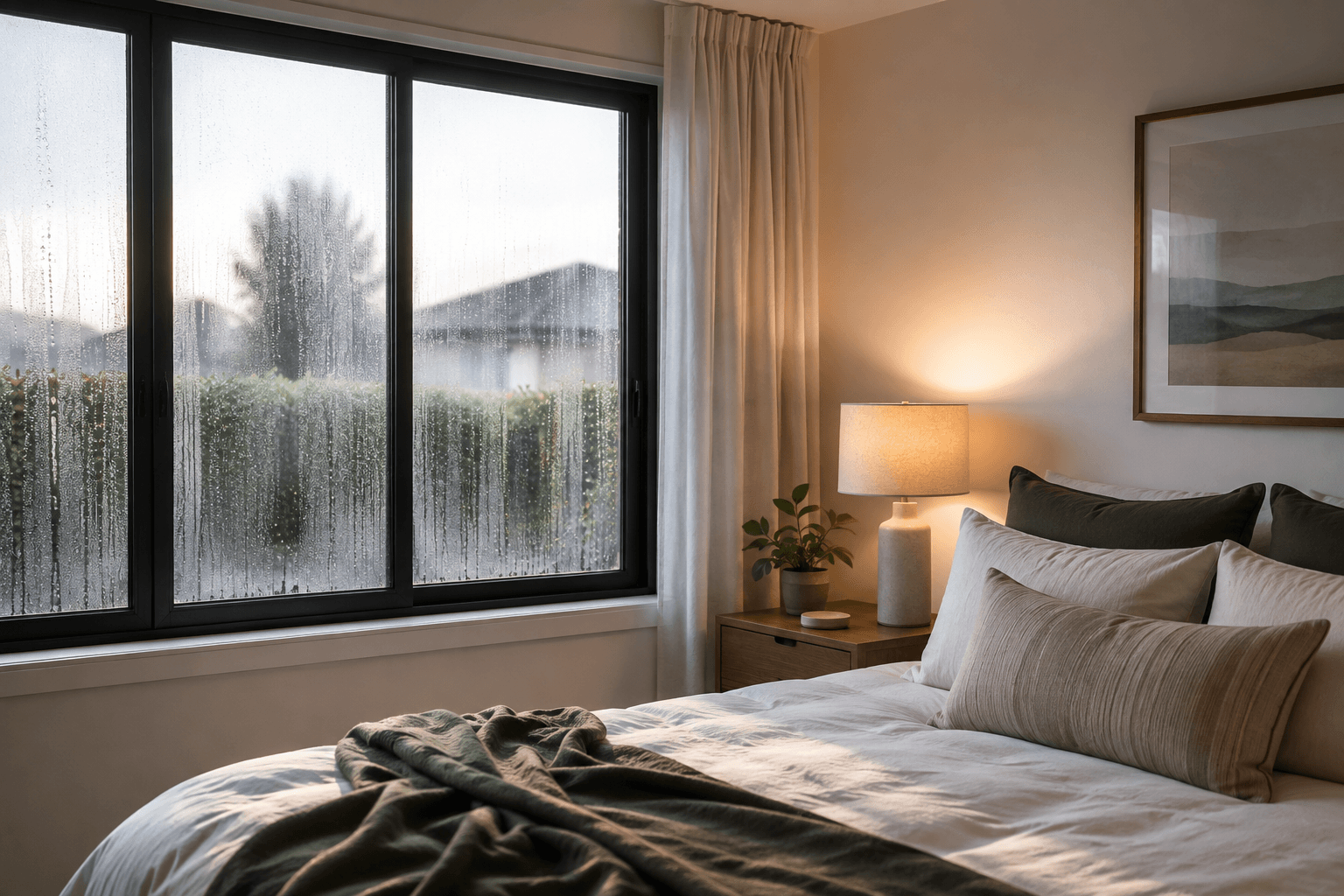
If wet windows are part of the morning routine, simply wiping them dry deals with the symptom rather than explaining why the moisture is there.
Everyday activities such as cooking, showering, drying clothes and simply living in the home add moisture to indoor air.
When that moisture is not managed effectively, it can contribute to condensation, damp-feeling rooms and stale air.
Ventilation can be part of the solution, but the first step is understanding what is happening in the particular home.
An established home can have very different airflow, insulation and heating characteristics from a newer home.
Renovations, replacement windows, insulation upgrades and changes in how a household uses the home can also affect the way air and moisture move through it.
That means two Te Awamutu homes with the same condensation problem may not need the same solution.
Climate Systems looks at the home, the symptoms and how the household uses the space before recommending what to do next.
Understanding indoor moisture
Cooking can release moisture into the indoor air, particularly when extraction is limited.
Warm, moist bathroom air can move into other parts of the home if it is not effectively extracted.
Indoor clothes drying can add a significant amount of moisture to the air.
People themselves add moisture through normal daily activity and breathing.
Air leakage, insulation, glazing, heating and construction can influence when and where condensation forms.
Opening doors and windows can help air move through a home, but it is not always practical or consistent throughout the year.
A home ventilation system is designed to manage airflow more deliberately. The appropriate approach depends on the home.
Climate Systems considers factors such as the existing heating, insulation, moisture sources, layout and what you are trying to improve before recommending a system.
A ventilation system moves and manages air. A heating system adds heat.
They can work together, but one does not automatically replace the other. If a home is cold as well as damp, improving airflow without considering heating may leave part of the comfort problem unresolved.
Likewise, heating a home does not necessarily address the sources of excess indoor moisture or stale air. Climate Systems can look at both when assessing the home.
The house determines the solution
Introduces filtered air into the home and helps create ongoing air movement.
Uses controlled supply and extraction, with heat recovery where the system design supports it.
Kitchen, bathroom or other moisture-source extraction can be important where moisture is being generated.
A heat-transfer system moves existing warm air from one part of the house to another. A ventilation system is intended to manage air exchange and airflow.
If the problem is a warm lounge and cold bedrooms, heat transfer or another whole-home heating approach may be relevant. If the problem is condensation, stale air or excess indoor moisture, ventilation needs to be considered.
Sometimes a home has both problems. In that case, Climate Systems can look at the home as a whole.
Symptoms, not diagnoses
These signs can have different causes. An assessment helps determine whether ventilation is part of the problem and what other factors may need to be considered.
A practical assessment
We talk through the condensation, moisture, stale-air or comfort problems you're noticing.
Climate Systems considers the layout, existing heating and ventilation, likely moisture sources and how the household uses the space.
If ventilation is appropriate, we'll explain the approach that makes sense and why. If the problem is broader than ventilation alone, we'll explain that too.
Once you've decided to proceed, Climate Systems installs the agreed system and explains how to use it.
A home can have more than one comfort problem. If the windows are wet, the air feels stale and some rooms are difficult to keep warm, focusing on one symptom may not give you the result you're looking for.
Climate Systems can assess heating and ventilation together and help work out whether the home needs a ventilation solution, heating changes or a broader whole-home approach.
Related local services
Looking at your home's comfort more broadly? Explore Climate Systems' heating, cooling and ventilation Home Comfort Services in Te Awamutu.
Consider heating, airflow and moisture together when the problem affects more than one part of the home.
Explore service →Find a heat pump system, capacity and position suited to your particular home.
Explore service →Have relevant indoor and outdoor heat-pump components professionally checked.
Explore service →Common questions
Ventilation can help manage indoor moisture and airflow, which may reduce condensation where excess indoor humidity is contributing to the problem. But condensation can have several causes, including indoor moisture, surface temperatures, insulation, glazing and heating. Climate Systems looks at the home before recommending a solution.
Warm indoor air contains moisture. When that air meets a sufficiently cold surface, such as window glass, moisture can condense into water. How much condensation forms can be influenced by indoor moisture levels, heating, ventilation, glazing and the temperature of the surface.
Ventilation manages airflow and air exchange. Heat transfer moves existing warm air from one area of the home to another. They solve different problems, although some homes may benefit from considering both as part of a wider comfort solution.
Ventilation and heating perform different jobs. Ventilation manages air movement, while heating adds warmth. If the home is cold as well as damp, Climate Systems can assess both rather than assuming ventilation alone will solve the comfort problem.
There isn't one system that's right for every home. The appropriate approach depends on the home's layout, existing heating and insulation, moisture sources and what you're trying to improve. Climate Systems assesses these factors before recommending an option.
Ventilation may help manage indoor moisture where excess humidity is contributing to conditions that support mould growth, but mould can have several causes. Existing mould also needs to be addressed appropriately. Climate Systems does not position ventilation as a guaranteed mould treatment.
Yes. Climate Systems is based at 33 Rogers Place in Te Awamutu and provides residential heating, ventilation and home-comfort services locally.
If condensation, excess moisture or stale air is becoming a regular problem, start with the home rather than guessing at the solution. Climate Systems can look at what's happening and explain whether ventilation, heating or a broader home-comfort approach makes sense.